Singapore-based financial blog that aims to educate people on personal finance, investments, retirement and their Central Provident Fund (CPF) matters.

Showing posts with label Investment-Related. Show all posts

Wednesday, 24 May 2023

[Profit] +17% Gain On The Icahn-Hindenburg Trade


I made a trade 3 weeks back when Hindenburg Research published a paper accusing the legendary activist investor, Carl Icahn, of running a Ponzi scheme with his listed investment vehicle; Icahn Enterprise L.P.  (IEP).


Background Story


On 2nd May 2023, Hindenburg Research published a paper online accusing the investor Carl Icahn, of running a Ponzi scheme and overvaluing its underlying investments to prop up the share price.

IEP stock crashed from $50 to $32 (-36%) within 2 days of the paper's release.


Recommended Read: Trevor Noah Explaining CPF


Analysis


I took notice of the massive dip and immediately thought if a short-term trade could happen in this scenario.

I went to look up the previous 2 companies that Hindenburg had released a short report on - Adani Enterprise and Block Inc; and noticed a trend.

Adani Enterprise -53% within 5 trading days of the short report released on 25 Jan 2023.

 
Block Inc -26% within 3 trading days of the short report released on 23 Mar 2023.

However, both stocks experienced a short-lived bounce back up within 5 days of their corresponding short-research release date.

Based on this, I was convinced that IEP would exhibit a similar trend pattern, bearing a closer resemblance to Block than Adani.


Recommended Read: Why You Should Max Your CPF Retirement Sum Early


Trade & Results


03 May 2023: I entered a position on IEP at $32/share. 

It had fallen more than Block over a shorter period of time. 

Given that Icahn was famed for being aggressive, it felt like it was about time he would make an announcement strong enough for the stock to bounce.


04 May 2023: IEP fell to $30/share. Held on because the upside is coming!


05 May 2023: Stock bounced to $38, but I sold all my positions at $37.50 because the upward momentum was losing steam towards the back half of the trading day.


Return: +17% over 3 days, not too shabby I would say.


Recommended Read: Simplifying UOB's 7.8% Interest Rate


Conclusion


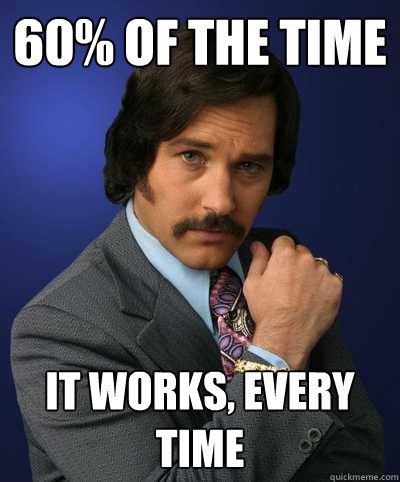
I don't know how strong this trading strategy is, but so far it seems to be working fine on 3 examples.

I now look forward to the next Hindenburg short report, which I guess will be in July 2023, because they seem to be releasing one every two months.


If you like articles like this, you might like our other previous trade on Netflix, link below.


Recommended Read: My 30% Gain from Netflix


Fuel Our Caffeine Fix


We survive on coffee in order to deliver good stories to you.

If our stories entertained or provided value to you, we would appreciate it if you would donate 1 cent to our coffee fund via the link here.

Your 1-cent donation keeps our stories brewing~


Promos & Referrals
We are starting to build a list of Promos and Referrals for our readers.
Click here to view the full list of Promos and Referrals we have. 


Hey You!


If you have a money-related story about you or your relatives that you want to share, let us know in the comments below or email us at investmentstab@gmail.com.
Alternatively, you could fill in the form below for us to contact you.
Story Form


Dear Reader!
As we progress towards the next phase of our journey, we would like to find out what would make you like us even more.
We hope you could help us fill in a short survey of 8 questions (4 of them are MCQs) so that we can help tailor our content to you.
Survey

Remember to offer your opinions. If you don't put your two cents in, how can you expect to get change?
Follow us on Facebook and Instagram for more timely updates about finance-related articles and memes! 😁
Subscribe to our newsletter too in case social media platforms decide to stop showing you our content.
Have feedback? Tell us now!

Sunday, 5 March 2023

ChatGPT says 'No' to NCMP Land Sales Proposal


In the recent budget debate, NCMP Hazel Poa proposed an alternative source of revenue to be added to Singapore's yearly budget.


Current Framework (CF):

  • Keep proceeds from land sales in reserves and invest them.
  • Allow up to 50% of investment returns generated from the proceeds to be spent in the budget under the NIRC.


Alternative Proposal (AP):

  • Land sale proceeds are dividend equally over its lease period, with each portion added into the corresponding year's budget as revenue.  
  • Invest the unused portion of the proceeds in reserves, with up to 50% of the investment returns allowed to be spent under the NRIC.


Needless to say, DPM Lawrence Wong rejected the proposal, citing that over the long term, the AP does not generate returns very different from the CF.


Recommended Read: Why We Still Need Insurance Agent


Introducing, ChatGPT


We figured, rather than rely on our brains, let's rely on an AI.

Hence we pit the CF against the AP in ChatGPT.

We screenshot the questions and answers we got below.


So, it doesn't seem ChatGPT is very pro the AP.

But, to make sure it is not biased, we also asked it what are the benefits of the AP.


Obviously, at this stage, ChatGPT started to contradict itself a little.

It first stated that drawing on land sales is volatile while NIRC provided stable funds.

Then it contradicts itself by saying that land sales are stable while NIRC is volatile due to investment risk.

Our conclusion is: to take the ChatGPT response with a pinch of salt.


Recommended Read: What I Learnt During My 1-Year SGUnited Traineeship - Part 1


Rationale of the Alternative Proposal


In personal finance, there are several schools of thought on how to manage money for retirement.

One of them is the "living off the interest" approach, which emphasises on:

  1. Accumulate a large pool of capital (principal)
  2. Spending only the returns generated by the principal
  3. Never draw down on the principal.
This is the approach utilised by the CF.


Another school of thought is the "4% rule movement", which emphasises:

  1. Accumulate a large pool of capital (principal)
  2. Principal and the returns generated go back into the pool to form the portfolio
  3. Draw 4% of the portfolio every year to spend

This is the approach utilised by the AP, but with a much more conservative twist: drawing only 1% instead of 4%.


Recommended Read: Trevor Noah Explaining CPF


Excel Spreadsheet


So we ran an Excel Spreadsheet just to see how much of a difference each framework would generate in terms of returns.

Below are some of our basic findings

  1. By the end of the 99-year period, CF would have 75% more funds than the AP.

  2. By the end of the 99-year period, CF would provide 57% more in annual NIRC contribution than the AP.

  3. Over the full 99-year period, CF would have contributed 23% more than the AP, in terms of total dollar contribution.

  4. In the beginning, AP would contribute more to the NIRC as compared to the CF. The switch will happen at the 35th-year mark, where onwards CF will start contributing more to the NIRC than the AP.

  5. At the 64th-year mark, CF would surpass the AP in total accumulated dollars contributed to the NIRC. 


Recommended Read: Why You Should Max Your CPF Retirement Sum Early


Conclusion


There is no right or wrong answer on this matter.

It is a matter of perspectives and personal preference.

Because at the end of the day, mathematically, both approaches still grow the reserves and contribute to the budget.

It is just whether we prefer the "living off the interest" approach (our current way) or the "4% rule movement" approach (NCMP's suggestion).

Personally, we're on the "living off the interest" camp, but that's our preference.

What about you?

Let us know in the comment section which approaches you prefer.


Recommended Read: Simplifying UOB's 7.8% Interest Rate


Fuel Our Caffeine Fix


We survive on coffee in order to deliver good stories to you.

If our stories entertained or provided value to you, we would appreciate it if you would donate 1 cent to our coffee fund via the link here.

Your 1-cent donation keeps our stories brewing~


Promos & Referrals
We are starting to build a list of Promos and Referrals for our readers.
Click here to view the full list of Promos and Referrals we have. 


Hey You!


If you have a money-related story about you or your relatives that you want to share, let us know in the comments below or email us at investmentstab@gmail.com.
Alternatively, you could fill in the form below for us to contact you.
Story Form


Dear Reader!
As we progress towards the next phase of our journey, we would like to find out what would make you like us even more.
We hope you could help us fill in a short survey of 8 questions (4 of them are MCQs) so that we can help tailor our content to you.
Survey

Remember to offer your opinions. If you don't put your two cents in, how can you expect to get change?
Follow us on Facebook and Instagram for more timely updates about finance-related articles and memes! 😁
Subscribe to our newsletter too in case social media platforms decide to stop showing you our content.
Have feedback? Tell us now!

Thursday, 2 March 2023

Reasons Why the 99-Year Term Limit on Properties are a Must

There are 3 (R)easons why Singapore set a 99-year term limit on public housing and most private housing.

2 of which have been mentioned by the Singapore Government multiple times on multiple occasions.

The last reason was one we thought of as a potential reason that was not explained/explored by people.


Recommended Read: Trevor Noah Explaining CPF


Reason One: Revitalise old Building(s)


Buildings deteriorate over time.

Eventually, there will come a time to demolish and rebuild.

However, if no absolute deadline is set, the probability of the building being demolished is ZERO as people living inside the building will not allow it to happen.

Hence a rule (or law in this case) has to be set in place to mandatorily allow the buildings to be vacated for demolishing and rebuilding.


Recommended Read: Why We Still Need Insurance Agent


Reason Two: Re-purpose the Land


The second reason for the 99-year lease limit on public housing in Singapore is to ensure a sustainable supply of land for future generations. 

By having a set lease period, the government can plan for the redevelopment and renewal of housing estates and allocate land for new developments, such as parks, schools, and hospitals, in a systematic and sustainable manner. 

This helps to prevent a situation where land becomes scarce and unaffordable, which could lead to social unrest and economic inequality. 

Therefore, the 99-year lease limit serves as a long-term planning tool to ensure that land remains available and affordable for the benefit of all Singaporeans.


Recommended Read: What I Learnt During My 1-Year SGUnited Traineeship - Part 1


Reason Three: Reduce Land Concentration


The 99-year limit is required to prevent the land from being concentrated in the hands of a tiny group of the population.

The Pareto Principle (80-20 rule) has been shown to be evident in most social and economic situations, be it investments, properties, wealth, productivity, or even crime.

Should everyone be allowed to freely own their home indefinitely without a "redistribution" from an external force, it is only a matter of time before 80% of the land goes to 20% of the population, and the rest of the people have to scramble for the remaining 20% of the land.

There was a research that dove into land ownership in Singapore before we had the Land Acquisition Act (LAA).

Research had estimated that the Hadrami Arab community had at one point owned close to 50% of all the land in Singapore, although they made up less than 1% of the population.

They were one of the major property owners in Singapore before the implementation of the LAA.

Had it not been for the LAA, it would be safe to assume that there would most likely be a lot less land today for public use. 

Hence to prevent properties from concentrating into the hands of a few, term limits were set on properties so that the majority of the land would return back to the government for redistribution for the next generation.

Of course, this might be counterfactual as it has not happened.

But we definitely would not want to plan our policies in a way that would put this theory to the test.


Recommended Read: Why You Should Max Your CPF Retirement Sum Early


Conclusion


These are the 3 reasons why we think there's a 99-year limit on Singapore's lands.

Do you know of any other reasons?

Let us know in the comments below.


Recommended Read: Simplifying UOB's 7.8% Interest Rate


Fuel Our Caffeine Fix


We survive on coffee in order to deliver good stories to you.

If our stories entertained or provided value to you, we would appreciate it if you would donate 1 cent to our coffee fund via the link here.

Your 1-cent donation keeps our stories brewing~


Promos & Referrals
We are starting to build a list of Promos and Referrals for our readers.
Click here to view the full list of Promos and Referrals we have. 


Hey You!


If you have a money-related story about you or your relatives that you want to share, let us know in the comments below or email us at investmentstab@gmail.com.
Alternatively, you could fill in the form below for us to contact you.
Story Form


Dear Reader!
As we progress towards the next phase of our journey, we would like to find out what would make you like us even more.
We hope you could help us fill in a short survey of 8 questions (4 of them are MCQs) so that we can help tailor our content to you.
Survey

Remember to offer your opinions. If you don't put your two cents in, how can you expect to get change?
Follow us on Facebook and Instagram for more timely updates about finance-related articles and memes! 😁
Subscribe to our newsletter too in case social media platforms decide to stop showing you our content.
Have feedback? Tell us now!

Sunday, 20 February 2022

Investment Stab 2022 Stock Market Predictions


Last year we made a list of 4 stock market predictions. 

Investment Stab 2021 Stock Market Predictions

So we will first review our predictions, then go over our 2022 predictions.


Review of 2021 Stock Market Predictions


1. US Stock Market Will End 2021 Higher (Correct)

The US stock market, represented most accurately by the S&P500, posted a total return of 28.7% for the year 2021.

The majority of that gain was from the increase in the index price, rising from $3764 to $4766. 


2. STI to Stay Flat for the Year (Wrong)

The Straits Times Index (STI) returned 9.7% in price appreciation, meaning a more than 10% total return if we were to include dividends.

That's anything but flat.

So we are wrong on this one.


3. Air Travel Will Recover (Wrong)

Well, we did not expect Omicron at the start of 2021, so I guess we got this wrong.

But, air travel did recover - slightly, given that there's more travelling now than a year before. 

Just that it is far from what we had expected - a near-full recovery.


Because we expected a recovery, we predicted that SATS will reach $5 by end of 2021.

That did not happen, SATS is still hovering at where it was a year ago, ± $4.00, though it closed 31st December 2021 at $3.89.


4. SIA Will Not Pass $5 By End Of 2021 (Technically Correct)

Singapore Airlines Limited (SIA) closed on 31st December 2021 at $4.99.

If we're thick-skin enough, we would say we got it right.

But it did break above $5/share in 2021, only to drop back due to Omicron.


Conclusion: 1.5/4 correct

I would say our prediction for the year 2021 kind of sucked, just like our personal stock picks for the year 2021.

2021 is probably just not our year 😥.

We get this wrong often, but our goal is to post our thoughts, views, predictions, and review them 1 year later to see which part in our analysis and thought process went wrong.


Recommended Read: Why We Still Need Insurance Agent


So here comes our 2022 stock market predictions!


1. US Stock Market Will End Higher in 2022


Based on historical data, the probability of a US stock market ending higher in a given year is 70%.

So by saying the market will end higher, we are 70% likely to be correct 😉.

However, the market can be up a lot (like last year), or up a little.

We predict that this year, it will be up a little (think less than 10%) because it's the second term of a US president, which tends to have muted returns for the stock market.


2. Amazon & Microsoft Reach New Highs


Disclaimer: I own shares in both of these companies.

My bet on these 2 companies reaching new highs is mainly because of my cloud bet.

Amazon owns AWS and Microsoft owns Azure, the 2 biggest cloud providers in the world.

As we continue to go digital and move the workload to the cloud because of Covid and work-from-home (WFH) arrangements, cloud usage will continue to grow at high growth rates (30%+ per annum).

What better way to capture that growth than to invest in the top cloud providers, especially since scale is extremely important in the cloud business.

PS: my personal bias is Amazon simplify because, with its stock price at USD3,000, there is potential for a stock split which would just make the share price more valuable than what it is currently worth (aka Google).


3. STI to Rise Sharply for the Year


Last year we predicted the STI to stay flat for the year because 40% of the STI weightage is in banks (DBS, UOB, & OCBC).

And because the US Fed Chairman had stated at the start of the year they will keep rates low until 2023.

A low-interest-rate environment is bad for banks' profitability, hence we did not think banks will do well, and hence STI will also not do well.

However, this year, the US Fed Chairman has announced it will do several rounds of rate hikes to curb rising inflation.

We expect this to boost the banks' profitability, leading to higher bank share prices, and thus higher STI prices.

We expect STI to rise more than 10% in total returns for the year.


Recommended Read: Why You Should Max Your CPF Retirement Sum Early


Conclusion

These are our predictions of what we think will happen in 2022.

We are not 100% sure we will be correct.

But we do think we probably will not be too wrong.


As always, do your own research, due diligence, own analysis, and invest according to your risk appetite.

We are not giving you recommendations, just our predictions.


Promos & Referrals
We are starting to build a list of Promos and Referrals for our readers.
Click here to view the full list of Promos and Referrals we have. 


Hey You!


If you have a money related story about you or your relatives' that you want to share, let us know in the comments below or email us at investmentstab@gmail.com.
Alternative, you could fill in the form below for us to contact you.
Story Form


Dear Reader!
As we progress towards the next phase of our journey, we would like to find out what would make you like us even more.
We hope you could help us fill in a short survey of 8 questions (4 of them are MCQs) so that we can help tailor our content to you.
Survey

Remember to offer your opinions. If you don't put your two cents in, how can you expect to get change?
Have feedback? Tell us now!

Follow us on Facebook and Instagram for more timely updates about finance-related articles and memes! 😁
Subscribe to our newsletter too in case social media platforms decide to stop showing you our content.

Tuesday, 4 May 2021

Corporate Strategy 1: Rundle, Recurring Revenue Bundle


We are starting a new segment in our articles.

We are now going to talk about corporate strategies and business models, something we picked up when learning about investing.

Today, more than ever, business models and strategies are playing an increasing weight in how we invest our money, and we think it's only appropriate that we also dive into it when talking about investing.

And in our first-ever dive into this topic, we are going to be talking about "Rundle".


What's a "Rundle"?


The Rundle, or recurring revenue bundle, was the term coined by NYU professor Scott Galloway, to explain how companies can mix 2 business models (recurring-revenue subscription and bundling) together as one to grow faster.

"Recurring-revenue subscription" was the in-thing a few years ago. Any startups that had "subscription" as part of its business model found no shortage of venture capital fund outbidding each other to invest in the startups.

"Bundling" on the other hand, is an old retail strategy of combining several products together to sell as a package. Think selling masks with hand sanitiser in 1 pack instead of as 2 separate items. Customers buy more because of the perceived discount, while businesses get a higher transaction size.

The "Rundle" is the combination of the 2, where businesses package several products together and sell them as a subscription, offering a better value proposition, better value, and make higher revenue.


Recommended Read: 9 Things I Learnt from my Internship at GIC


How It Is Being Used?


While companies in the subscription business are working hard to find products to bundle into their subscription, companies in the bundle business are working hard to get into a subscription relationship with their customers.

Case in point: Apple and Walmart.

Apple & Apple One

Source: Apple

Even on their service website, the first sentence states that it's a subscription that bundles several of Apple's services.

Originally, you can subscribe to the different services (Apple Music, Apple TV+, Apple Arcade, and iCloud) on their own. 

Maybe you're already subscribed to Apple Music and iCloud, but now at just a couple dollars more, you can get TV+ and Arcade, instead of paying for the full price.

That "lower entry price" would entice customers who are on the edge to give the service a shot, and give Apple the slight revenue boost in its services segment.

This is the classic subscription model pushing for bundling to achieve the "Rundle".


Walmart & Walmart+

Source: Walmart

The sleeping giant has awakened and it's starting to face its toughest competitor (*cough cough Amazon) head on!

Walmart is a supermarket giant in the US, and while it has been growing over the years, the growth has not been spectacular and it has been gradually losing market share to Amazon.com.

Being a traditional supermarket, it is in the "bundle" business, that is, you get a slight discount if you bought 2 bottles of Pepsi instead of 1.

Businesses of such nature are one-off: customers buy where it is cheap and convenient, and have a low cost of switching to another provider.

Customers don't build an entrenched relationship with Walmart because if today another shop is selling cheaper than Walmart, customers are going to go to that other shop.

What Walmart has decided to do, is to start offering its customers a subscription service to entrench their customers into a relationship with Walmart (copying the strategy of Amazon Prime).

For a subscription fee, customers can get free shipping and many other perks, which attracts customers to do more of their shopping with Walmart because they have already paid a subscription fee (a sunk cost) and wants to utilise that fee to the max.

This is the classic bundling model pushing for subscription to achieve the "Rundle".


How It Shouldn't Be Used


Source: Inc.com

While most companies are innovating ways around how they can offer a "Rundle" service to their customers, not every company will be able to get it right.

To put it simply, a "Rundle" is only a value proposition.

It is a good way to accelerate growth IF there is a good Product-Market Fit (we'll explain product-market fit next time).

If there is no product-market fit, pushing out a "rundle" service is not going to grow your business.


Example 1: Bundling business pushing for subscription

You have a retail shop that uses the bundling business model currently, and you're pushing towards a "rundle".

However, the prices you charge before and after the subscription fees, are higher than your competitors.

In this case, what's the value proposition you bring to your customers to entice them to enter into a subscription relationship with you?

Why would a customer pay a $10 subscription per month to buy from a grocery store that charges higher prices than the supermarket across the street?

Is it fast delivery? Is it monthly promotions? Is it any other value proposition that can make customers find the whole "rundle" valuable?

If there is no strong value proposition, you might not have a product-market fit, in which case you should work on improving the product instead of pushing out a "rundle" hastily.


Example 2: Subscription business pushing for bundling

You have a software subscription business that has 3 software products. 1 of them sells really well while the other 2 barely sells.

You hope to bundle your 3 software products together as a "rundle" so that your customers will be enticed to get all of them instead of just the best selling one.

Of the 3 software you offer, only 1 is of value to your customers while the other 2 are crap.

You can offer a "rundle", but no one is going to continue that subscription because no customers will want to pay extra money for things that they don't use or are lousy.

After testing out your "rundle", customers will eventually drop back to just subscribing for just your best product if the other products suck.

A "Rundle" doesn't solve the problem of having a lousy product.


Conclusion


A "Rundle" is a great way to accelerate the growth of your business. and build loyalty.

However, it is only one part of the whole strategy, and it only works IF your business has a product-market fit.


Recommended Read: What I Learnt 6 Months into My SGUnited Traineeship


New Product Launch (Beta)


We are building a new platform to help you find people to share your family plan subscriptions with. 

We help you find, match, subscribe and collect payment so that you don’t have to.

Convenience for you:

  • You don’t have to find people to share with you. We do it for you.
  • You don’t have to chase people to transfer you their share of the subscription fee. We do it for you.
  • You don’t have to remember to transfer your share of the subscription fee to that 1 person. We do it for you.
  • You don’t have to find it difficult to drop out of a family subscription plan because you shared it with your family/friends. We cover your share for you.

We like to know what you think about this service.
Let us know in the survey below what you think, and to be notified once we officially launch the product. 😉

SURVEY


Promos & Referrals
We are starting to build a list of Promos and Referrals for our readers.
Click here to view the full list of Promos and Referrals we have. 


Hey You!


If you have a money related story about you or your relatives' that you want to share, let us know in the comments below or email us at investmentstab@gmail.com.
Alternative, you could fill in the form below for us to contact you.
Story Form


Dear Reader!
As we progress towards the next phase of our journey, we would like to find out what would make you like us even more.
We hope you could help us fill in a short survey of 8 questions (4 of them are MCQs) so that we can help tailor our content to you.
Survey

Remember to offer your opinions. If you don't put your two cents in, how can you expect to get change?
Have feedback? Tell us now!

Follow us on Facebook and Instagram for more timely updates about finance-related articles and memes! 😁
Subscribe to our newsletter too in case social media platforms decide to stop showing you our content.

Sunday, 31 January 2021

10 Funny Reddit Comments on GameStop

If you do any form of investing in the stock market, you most likely heard of the recent GameStop saga.

If you didn't, may I recommend that you read the story HERE.

Needless to say, the sub-reddit thread that started this whole saga was filled with funny comments.

We fished out a few out of the hundreds of thousands of comments that we thought were pretty good for you to read and have a laugh.


1. Looking forward to a new Wall Street/Main Street movie post-lockdown 😁.


2. This is financial prudence 101.


3. Aint' this a pretty extreme analogy 🤣.


4. Just need 1 whale instead of many small fishes 🐳.


5. One of the best stories on a part of the Saga explained on Reddit.

6. Awesome logic there 👍. (No, just kidding. This is flawed logic).


7. The mentality of everyone who's in for the movement 🙌.

8. It's about sending a message 🔥. (PS: what message was it exactly?)


9. I'm no genius, but I'm quite sure owning the stock doesn't prevent the company from going bankrupt? 🤷‍♂️


10. Interesting reasons to "save" a cinema 🍿 


Bonus 11. So rude, but quite true 🤣.


Recommended Read: Why You Should Max Your CPF Retirement Sum Early


Conclusion

I didn't participate in either side of the trades.

These stocks don't fit into my portfolio.

But, I sure am interested to see how this will unfold next week! 

Ending this post with a meme image of our own:


Promos & Referrals
We are starting to build a list of Promos and Referrals for our readers.
Click here to view the full list of Promos and Referrals we have. 


Hey You!


If you have a money related story about you or your relatives' that you want to share, let us know in the comments below or email us at investmentstab@gmail.com.
Alternative, you could fill in the form below for us to contact you.
Story Form


Dear Reader!
As we progress towards the next phase of our journey, we would like to find out what would make you like us even more.
We hope you could help us fill in a short survey of 8 questions (4 of them are MCQs) so that we can help tailor our content to you.
Survey

Remember to offer your opinions. If you don't put your two cents in, how can you expect to get change?
Have feedback? Tell us now!

Follow us on Facebook and Instagram for more timely updates about finance-related articles and memes! 😁
Subscribe to our newsletter too in case social media platforms decide to stop showing you our content.