Singapore-based financial blog that aims to educate people on personal finance, investments, retirement and their Central Provident Fund (CPF) matters.

Wednesday, 6 April 2016

5 Issues with China’s Growth

As China enters its new phase of slower growth, it needs to cope with several things
  1. Drop in investments into China
  2. Declining producer prices
  3. Rising wages
  4. Rising corporate debts
  5. Shifting from export-led economy to consumption-led economy


1) China’s declining growth rate would result in less investments (local or foreign) pumping into its economy. Currently, investment rates in China is close to 45% of its GDP. However, as its growth rate starts to decline, such levels of capital investments would no longer make economic sense.


2) Overcapacity and overproduction has led to widespread decline in producer prices. Companies are struggling with lower revenue and slower turnover. Global demand for China’s goods are declining as a result of low global economic growth.


3) The average worker’s wage has doubled since 2004 and is expected to continue rising. This increase in expense has resulted in several factories in China to close down and relocate to cheaper countries like Indonesia or India. Those factories that remain in China face difficulty finding cheap labour to produce cheap goods. This undermines China’s competitiveness and also squeeze their factories of its profit margins..


For more details on point 2 & 3, you can check out the video below:


4) China’s public firms have seen their accounts receivable ballooned to US$590 billion since 2014. This was a result of point 2 and 3. This partly contributed to China’s swelling stock of credit: US$30 trillion as of 2015. Straits Times reported that corporate bankruptcies might be 20% this year after corporate insolvency rose by 25% in 2015.


5) Alibaba founder Jack Ma once said that China’s slowing growth is not actually a bad thing but is a shift towards a more sustainable growth model, one that is led by consumption instead of exports.
Base on World Bank’s data, from 2011-2015, household consumption is an average 36.5% of China's GDP. This figure is expected to rise as China consumers are expected to increase their spending by 10% each year until 2020 according to a McKinsey report.

What is dangerous however, is China’s transition from export-led to consumption-led economy and how global markets perceive the risks involved in its transformation.

Remember to offer your opinions. If you don't put your two cents in, how can you expect to get change?

Have a feedback? Tell us now!

Subscribe to us or
Follow us: Investment Stab on Facebook
Tuesday, 5 April 2016

End of China?

There have been strong volatility in the local market as we saw big drastic movements in the recent weeks. Daily STI could swing 1%+ up or down. It is evident that the increase in global volatility and swings were caused by the announcements made by key players in the financial world.

One of the announcements came from Federal Reserve Chairperson Janet Yellen who kept interest rates unchanges but remains wary of the fluctuation in oil prices as well as the global economic developments, particularly in China.

With the wide news coverage of China's economic performance, it is not unusual to know that China's economy is not performing as well as it used to and is slowing down at an alarming rate (Although it is still outperforming Singapore's growth; 3% compared to 6.5% in China).
So now what is this big hoo-hah with China's economy that is worrying most of the world's leaders?

China's economic growth engine is slowing down and it is mainly due to one reason: The end of its migrant boom. Its rural population have stopped moving into the cities and those who have moved in the past are returning to their rural towns. The explosive economic boom made possible through the migration of cheap labour from rural cities is starting to face exhaustion from raising labour cost and diminishing productivity returns. This is due to the discrepancy of supply and demand in their labour's skill set. Low-skilled workers are losing their jobs as China moves up the value curve to "middle-skilled jobs and, in many coastal cities, to upper-level sophisticated jobs - competing with the middle-class everywhere.". (quoted from DPM Tharman Shanmugaratnam in View China's economic woes in perspective': Tharman,).

To understand more about the migrant-led economic boom, you can refer to this video which is very informative on the phenomena: https://www.youtube.com/embed/t487ILVf87k


However, I feel that China is not completely buried in the grave; it can still help itself in its current predicament. Firstly, the current situation had been experienced by many developed countries where there is a displacement of labour workers to higher value service workers. Hence, it has some case studies to follow and mimic according to its current situation. It has the resources and power to smoothen and ease the labour transition.

Secondly, the current predicament may present itself as a opportunity for China as workers move back to the rural areas, bringing with them capital and experience. If given the necessary push and policies, a more even growth can be attained, boosting the general economic growth since urban cities usually have a lower growth opportunity due to their inherent peak productivity performance derived from structural benefits.

Singapore, being extremely dependent on China's performance due to its close trading relationship, would definitely experience the impact from China's stance and reactions to its current status. Hence, it is important to know how our neighbouring countries are performing.

Please feel free to drop us a comment below and share on the video or posts to let others be aware of the current region.
Remember to offer your opinions. If you don't put your two cents in, how can you expect to get change?

Have a feedback? Tell us now! 
Subscribe to us or Follow us: Investment Stab on Facebook

Tuesday, 29 March 2016

Singapore Budget 2016 - U-SAVE GST Vouchers

Announced on the 24th March 2016's Singapore Budget, Singaporeans will receive their annual U-SAVE GST vouchers for the year 2016.
The U-SAVE GST Voucher is used to help households reduce their utility bills.

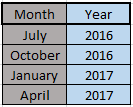
The months of rebates are as per below:


The amount of rebate is as per below:


So, your household will receive the appropriate rebates during the stated months above.

PS: If you own more than 1 property, you do not qualify for the U-SAVE GST Voucher.


Remember to offer your opinions. If you don't put your two cents in, how can you expect to get change?

Have feedback? Tell us now!

Subscribe to us or
Follow us: Investment Stab on Facebook


Recommended Post You Might Like

 5 Things to Know about CPF Nomination
5 Things to Know About CPF Nomination
Budget 2016: How much GST Voucher would you get?
Budget 2016: How much SCC Rebates would you get?

Saturday, 26 March 2016

Singapore Budget 2016 - GST Vouchers

Announced on the 24th March 2016's Singapore Budget, Singaporeans will receive their annual GST vouchers for the year 2016.
In addition to the normal GST vouchers, this year, the Government will provide a one-time Special GST Voucher - a Bonus!
You will receive a letter in July how much you will get from your GST Voucher.

Eligibility
1) Assessable Income Earned in 2014: $26,000 and below
    Yes, your eligibility for the year 2016 GST Voucher is dependent on your 2014 income.
2) Age 21 or above in the year 2016
3) Singaporeans residing in Singapore

Ineligibility
1) Singaporeans owning more than 1 property as of 31 December 2015 will not get the Special GST Voucher.
2) Assessable Income Earned in 2014: more than $26,000


*you can check your home's annual value from the IRAS website.
The link and instruction is here: https://mytax.iras.gov.sg/ESVWeb/default.aspx


Friday, 25 March 2016

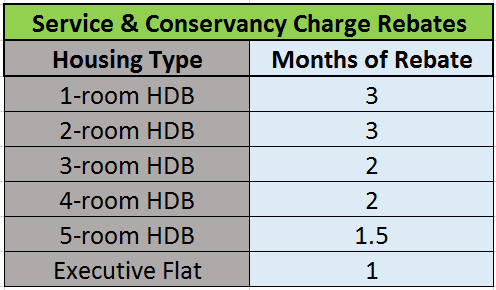
Singapore Budget 2016 - Service & Conservancy Charge (SCC) Rebate

Announced on the 24th March 2016's Singapore Budget, Singapore households will receive between 1 to 3 months of SCC rebates in the year 2016.
The months of the rebate were not announced.
But if like previous years, the rebate will be given out in April, July and October of this year.
Below is the rebates for the different type of housings.


MORE LINKS
Can't Hit CPF Retirement Sum?
4 Things to know About Withdraw $ from CPF
5 Financial Things to do in your 20s
6 Points your CPF is like your Bond Portfolio
Reducing CPF Housing Accrued Interest
5 Things about CPF Nomination YOU SHOULD KNOW


Remember to offer your opinions. If you don't put your two cents in, how can you expect to get change?

Have feedback? Tell us now! 

Subscribe to us or 
Follow us: Investment Stab on Facebook

Tuesday, 22 March 2016

Berkshire Hathaway 2016 Annual Letter

Key Lessons by Warren Buffett to Investors in his annual Shareholder Letter.
Same as with last year, we summarised some of the key points to note from the Legendary Investor's Annual Letter to his Shareholders (and fellow investors!)
The full 2015 annual report is available HERE.
Key lessons for 2014 available HERE.

MORE LINKS
Can't Hit CPF Retirement Sum?
4 Things to know About Withdraw $ from CPF
5 Financial Things to do in your 20s
6 Points your CPF is like your Bond Portfolio
Reducing CPF Housing Accrued Interest
5 Things about CPF Nomination YOU SHOULD KNOW


1) Low Growth? No Problem - as long as population growth remains low.
2% annual economic growth coupled with 0.8% annual population growth means a net 1.2% per capita growth, and such growth is actually good enough - especially when compounded over long periods like over a decade.


2) Life today is better than John D Rockefeller's times - even though he had more money.
We enjoy a better standard of living today than the past: medical, transportation, communication, entertainment, etc.
How the wealth will be distributed, however, would continue to be the problem that needs to be solved by the government.


3) Efficiency means increasing output per hour of employment
Productivity is linked to prosperity.
It allows for more goods and services to be created with less manpower required, allowing more people to do other things, creating new goods and services.
While many have lost their jobs to machines, this is inevitable improvements that will occur to improve society as a whole.
Examples are given in his report:

     a) Farming Industry
         1900 America - 11 million worked in the farming industry, 90 million acres of land devoted to corn farming yielding 30 bushels per acre.
         2015 America - 3 million working in the farming industry, 85 million acres of land devoted to corn farming yielding 150 bushels per acre.

     b) Rail Road Industry
         1947 America - 1.35 million worked in the railroad industry, revenue ton-miles of freight moved by Class I railroads that year totalled 655 billion.
         2014 America - 187,000 working in the railroad industry, revenue ton-miles of freight moved by Class I railroads totalled 1.85 trillion.
         The improve in productivity resulted in a 55% inflation-adjusted price drop for moving a ton-mile of freight.

     c) Energy Industry
         1999 Iowa - Berkshire Hathaway Energy unit acquired Iowa utility. It produced 19 million megawatt-hours of electricity while employing 3,700 people.
         2015 Iowa - Berkshire Hathaway Energy unit Iowa utility produces 29 million megawatt-hours of electricity while employing 3,500 people.
         The increase in efficiency allowed BHE to not raise prices for 16 years while the industry rate increased by 44%.


4) "the early bird gets the worm, the second mouse gets the cheese."


5) 2016 Annual Shareholder Meeting can be watched Online
Berkshire Hathaway's 2016 Annual Shareholder Meeting will be streamed online for the first time on https://finance.yahoo.com/brklivestream .
Date of the meeting is April 30th 9am (US time).


For more on Warren Buffett letters, see below:


Remember to offer your opinions. If you don't put your two cents in, how can you expect to get change?

Have feedback? Tell us now! 

Subscribe to us or 
Follow us: Investment Stab on Facebook

Friday, 11 March 2016

What IF I Can't Hit my CPF Retirement Sum?

For an updated version, refer to the article HERE.

Dear Readers,

I would like to share with you an important issue I believe every Singaporean faces: What if I cannot hit my CPF Retirement Sum?

Answer: NOTHING HAPPENS!

MORE LINKS
Fresh Year, Fresh Pessimism? 
4 Things to know About Withdraw $ from CPF
5 Financial Things to do in your 20s
6 Points your CPF is like your Bond Portfolio
Reducing CPF Housing Accrued Interest
5 Things about CPF Nomination YOU SHOULD KNOW


Do not worry. If you do not hit the Retirement Sum (FRS or BRS), there is no penalty involved.
You are also not required to top up the difference to CPF in the event you do not hit the Retirement Sum.
Yes! You are correct! It is not compulsory for you to hit your CPF Retirement Sum.

Whether you hit it or not, you would still draw a monthly payout from CPF when you reach your drawdown age (age 65). You will just receive a lower money payout from CPF.

The only problem is that you are unable to withdraw most of your money in your Retirement Account - you can only withdraw up to $5,000
But, you can pledge your property to withdraw money in excess of the Basic Retirement Sum (BRS).
The BRS on 2016 is set at $80,500.
If you pledge your property at age 55, you will be able to withdraw money in your CPF in excess of the BRS.
Eg: if you have $100,000 in your Retirement Account (RA) as of December 2015, you can withdraw up to $19,500 from your RA if you pledge your property to CPF.

We talked about the types of CPF Retirement Sum previously (Link HERE)
Although the figures look daunting and achievable, there are actually not many serious consequences if you do not meet it.

Actually, you do not really need to hit the FRS.
A lot of people are actually looking at the FRS and wondering if they can ever withdraw the money above the FRS.
However, you can aim to hit just the BRS (for more info, click HERE).
1) If you hit BRS with no excess money, you will still be able to withdraw up to $5,000.
2) If you hit FRS, you can pledge your flat to withdraw out the money in excess of the BRS.
3) If you have money above the FRS, you can withdraw the excess money out or you can keep them inside to receive ERS (for more info on ERS, click HERE).

Personally, I would say aiming to hit the BRS is more achievable, possible, more satisfying and less daunting mentally.
1) It is a much lower target, hence an easier target to reach.
2) You still get a monthly payout, just not as much as FRS and ERS.
3) Yes, you cannot withdraw any money out. But, if you hit the FRS with no excess, you still need to pledge your house with CPF before you can withdraw the money in excess of BRS.
4) Of course, the more money you have in your CPF account, the money your dependents will get if you pass away before you finished the money in your CPF.

Instead of looking at the CPF minimum sum as a target where you can withdraw money at a certain age, look at it as a savings + annuity + life insurance plan.
We posted an article about how CPF is like insurance HERE


Remember to offer your opinions. If you don't put your two cents in, how can you expect to get change?

Have feedback? Tell us now! 

Subscribe to us or 
Follow us: Investment Stab on Facebook